Two perspectives on the same days
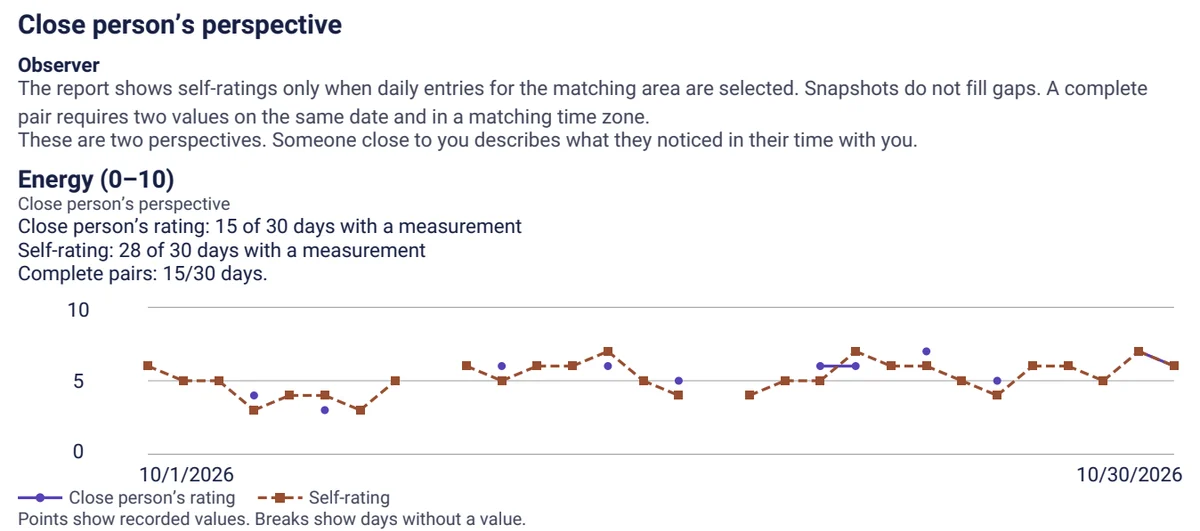
Your own energy entries and a close person's observations remain separate series. In this example, the comparison uses earlier daily check-ins, rather than the new form summaries.

Summaries
See how selected entries can come together in a monthly summary. Download a sample Feelink report for yourself or a conversation with a professional.
Sample with synthetic data
One month, different days. Notes about mood, energy and sleep sit alongside everyday context. See how you can look back on your own observations and prepare for a conversation.
1-30 October 2026
PDF · EN · 3 pages · 732 KB
Mood comes from daily check-ins. Gaps mean a missing value, not zero. New form fields and the close person's perspective are described separately.
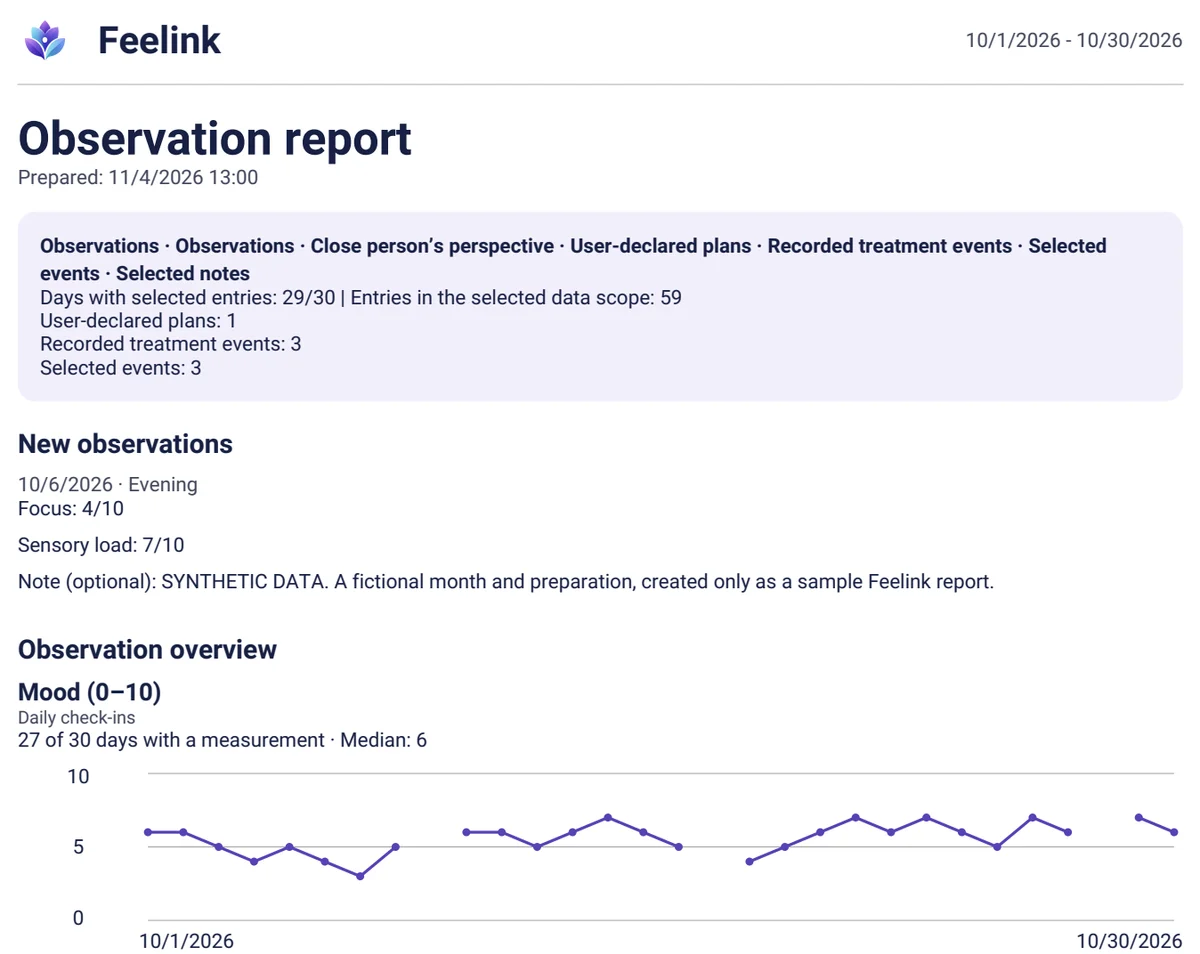
Mood, energy and sleep duration charts, plus a distribution of recorded energy. Each series shows its source and the number of days with a value.
A busy working week, a weekend away, short notes and two personal questions for a conversation. Selected fields also show focus and sensory load for one evening.
Energy as observed by one close person, alongside a separate fictional treatment section. These are examples of information you choose to include.
Your own energy entries and a close person's observations remain separate series. In this example, the comparison uses earlier daily check-ins, rather than the new form summaries.
The questions are written by the person keeping the journal. The treatment example separates the plan from recorded intakes, skipped intakes and a lack of confirmation. It does not assess effectiveness.
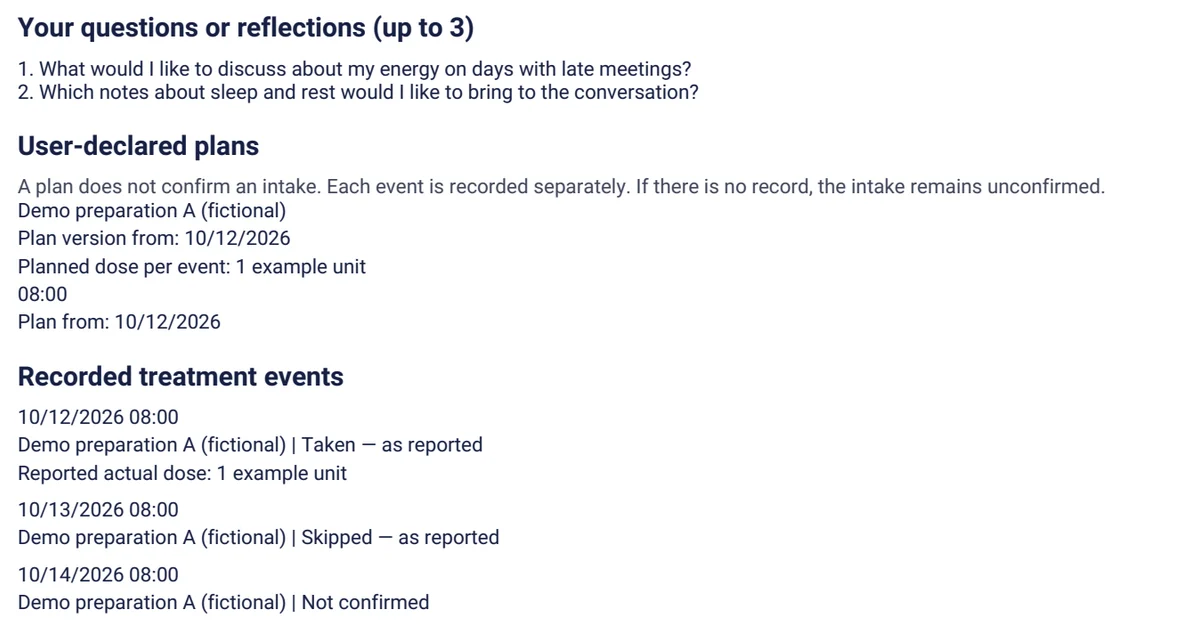
All observations, notes and the preparation in this example are fictional. The report shows selected content from a Feelink export. It is not a health assessment or treatment advice.
Select dates and areas you want to revisit. Notes, treatment and a close person's perspective have separate selections.
Read the contents before saving. You can go back and change your data selection.
Save the PDF for yourself or share it with someone you choose when you want to talk something through.
You do not have to remember every day. A report helps you return to specific dates, notes and questions. You can look back on a period and add your own reflections without sharing the file.
With a doctor, psychologist or therapist, you can begin with an observation you choose: a few shorter nights, a busy week or a note you want to revisit. A report brings together what you record. Interpretation and the conversation remain with you and the professional.
Your entries stay on your device. Close-person observations are excluded by default, and including an alias is a separate choice. The example above shows one possible configuration, not a required set of information.
The PDF opens without a password, and the recipient can keep a copy. How Feelink stores entries and what happens to an exported file.
Look at the period, source and coverage for each series. Gaps are not zeros, and occurrence together does not establish a cause or treatment effectiveness. Self-ratings, new form fields and close-person observations each have their own rules for bringing data together. The report describes selected records; it does not provide a diagnosis.